“REBUILDING FROM GROUND ZERO” – A Devotional from Nehemiah 2:1-20
Hanford, Armona, and Lemoore District of Churches
© Pastor Julian Kastrati, September 11, 2026
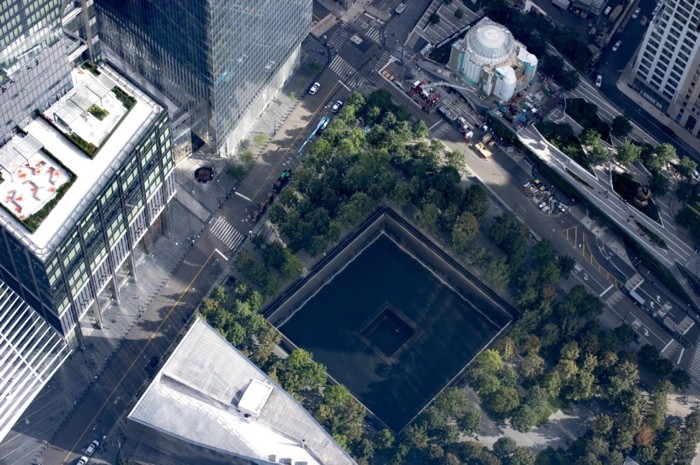
Today is a day Americans remember with sobriety.Exactly 25 years ago, on September 11, 2001, the Twin Towers in New York City were destroyed in a terrorist attack that changed our nation and left an unforgettable wound in countless families. What was left became known as Ground Zero.
But Ground Zero did not remain only a place of rubble. Today, there is a memorial, a museum, a transportation hub, businesses, and One World Trade Center rising over the New York skyline. The rebuilding did not erase the pain or replace the lives that were lost. But it reminds us that devastation and destruction does not have the final word. Something within us says, “We cannot remain in the ruins forever. We must rebuild.”
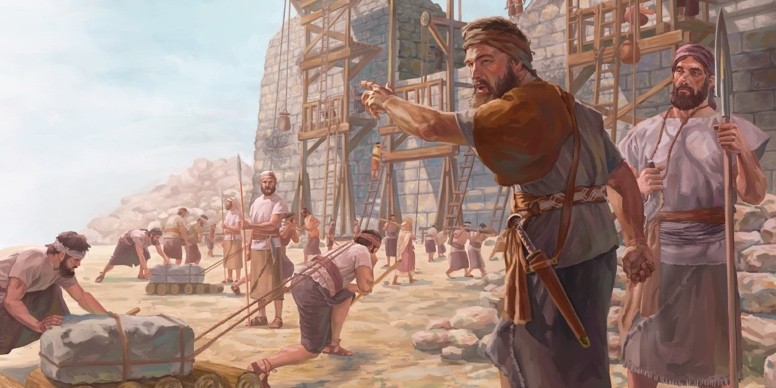
That is the message of the Book of Nehemiah chapter 2. Jerusalem had been destroyed by Babylon in 586 BC. Its walls were broken down, its gates burned, and many of its people carried away into captivity. Years later, some Jews had returned and the temple had been rebuilt, but Jerusalem’s walls still lay in ruins. The city was exposed, vulnerable, and carrying the shame of its past.
Then Nehemiah heard the report. He was far away, serving in Susa, the Persian capital. He was doing well. As cupbearer to King Artaxerxes, Nehemiah held a trusted and influential position. He had every human reason to focus on his own future and leave Jerusalem’s problems to somebody else. But he could not ignore the broken walls of his people’s city. He wept. He prayed. He fasted. Then he acted. He said: “Come and let us build up the wall of Jerusalem.” —Nehemiah 2:17
Broken walls close to home
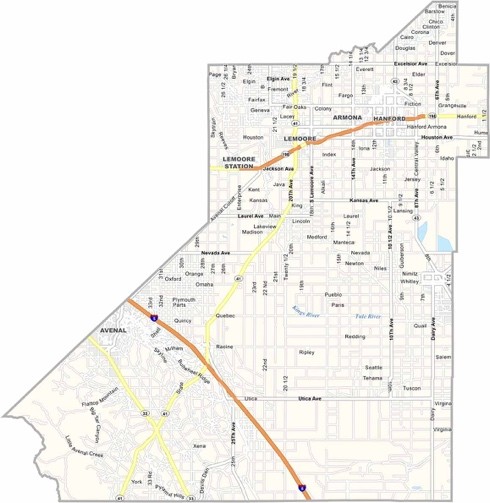
Here in Hanford, Lemoore, and Armona, we know that a community is much more than streets, buildings, schools, fields, and businesses. A community is made of people—families, neighbors, workers, students, military families, farmers, first responders, children, and older people.
And we have much to be thankful for. We live among hardworking people in this area. We have churches, schools, local businesses, farming families, military families, and a long history in this part of the Valley, Kings County in particular. We are seeing changes and growth around us too. New homes are being planned and built in Hanford, and the Hanford-Armona Road gradeseparation project was completed late last year.
However, when you think about it, not everything that is broken can be seen from the road!
Sometimes the broken walls are inside our homes, in our marriages, between parents and children, in a friendship that has gone cold, the private struggles of grief, financial pressure, loneliness, disappointment, anxiety, addiction, or shame.
You can meet somebody in Hanford, Armona, or Lemoore who may look perfectly fine on the outside, while inside they are trying their best just to hold things together.
And our HEAL churches can experience that too. The buildings may look fine. Sabbath services may continue as usual. But faith can weaken. Team leaders can become tired. Relationships can become strained. Young people can begin to drift. And somewhere along the way, we realize that something important needs attention.
Are there are broken walls around us? No question about it. The real question is: What will we do when God helps us see them? Nehemiah’s answer was simple: “Come and let us build up the wall of Jerusalem.” —Nehemiah 2:17
I believe there is something in that message for our HEAL churches as well. God has placed us in three lovely communities. Hanford, Armona, and Lemoore each have their own history, people, strengths, and needs. And perhaps God is calling us not merely to preserve what we have inherited, but to ask where He wants us to strengthen, restore, and build.
When rebuilding begins
Before there can be rebuilding, there must be a willingness to face what is broken.
Nehemiah looked at Jerusalem’s condition and refused to accept it as permanent. He did not say, “This is just the way it is.” He did not say, “Somebody should do something.” He allowed the condition of Jerusalem to break his heart.
In Nehemiah 2:3–5, he tells the king why he is sad: the city of his ancestors is in ruins. Then he makes a courageous request: “Send me to Judah…that I may rebuild it.”
That is where rebuilding begins.
There comes a moment when we have to say, “I do not want this anger to keep controlling my home. I do not want this addiction to define my life. I do not want this distance to remain between me and my child. I do not want discouragement to keep me from serving God. I do not want our church to settle for survival when God has called us to mission.”
Maybe for you, the prayer is very simple: “Lord, I want to rebuild.”
Perhaps you are carrying a burden for someone you love. Your family may look fine to everyone else, but you know there is a wall that has fallen. Maybe your faith has weakened. Maybe prayer has become difficult. Maybe a past failure has convinced you that you cannot begin again.
But hear the message of Nehemiah: ruins are not the end of the story.
God can begin a new work where we see only broken pieces.
Luke 1:37 says: “For with God nothing will be impossible.” Whether BC 586 or AD 2026, God specializes in rebuilding people.
Paul once persecuted the church. He approved of violence against believers and stood by when Stephen was killed. But Jesus met Saul on the road to Damascus, transformed him, and gave him a new mission. The man who tried to destroy the church became one of its greatest servants. God rebuilt Paul’s life from the ground up. And if God could rebuild Paul, He can rebuild you and me.
Prayer with sleeves rolled up
Nehemiah did not stop with a burden. He made a plan.
When the king asked what he wanted, Nehemiah was ready. He requested permission to travel. He asked for letters so he could pass safely through the territory. He asked for timber for the gates, the fortress, and the work ahead. Nehemiah prayed, but he also prepared. He trusted God, but he did not sit back and do nothing.
There is a lesson there for all of us. Rebuilding is spiritual, but it is also practical. If you want to rebuild a relationship, there may be a difficult conversation ahead. You may need to apologize. You may need to forgive someone who hurt you. And sometimes rebuilding means simply showing up consistently, even when the feelings are not there yet.
If you want to rebuild your finances, it may mean being honest about spending, making a workable budget, asking for wise counsel, and taking one faithful step at a time. If you want to rebuild your spiritual life, it may mean opening Scripture again, returning to prayer, coming faithfully to worship, and allowing other believers to walk with you.
And if we want to rebuild the spiritual life of our churches and communities, it takes more than saying, “We need revival.” It means praying for people by name, welcoming visitors, noticing the person who is alone, investing in children and young people, visiting the hurting, serving our neighbors, opening our homes, and sharing Christ with courage.
Nehemiah did not stand far away and criticize the broken walls. He went to Jerusalem. He inspected the damage. Then he invited the people into the work:
“Come, let us build.” Now, I love those words: “Let us.”
Rebuilding is rarely a one-person assignment. In Hanford, Armona, and Lemoore, God may be calling us to rebuild together. One person may rebuild through prayer. Somebody else may rebuild by encouraging a discouraged member. Another may open their home for a small group. Someone may mentor a young person. Someone may reconcile a relationship. Someone may simply serve faithfully when nobody notices.
No one can rebuild every wall. But every believer can help rebuild something. Proverbs 24:16 tells us: “For a righteous man may fall seven times and rise again.”
Falling is never final when God is involved. And I want to say this from the heart—not as someone standing above you, but in the same level, if not below, as your pastor, as a husband, and as a parent. I have not always gotten it right. There have been many moments when I have failed, many times when I could have handled things better as a pastor, a husband, a father… Many words I wish I’d said differently, many moments I wish I’d noticed sooner, many situations I wish I’d handled with more wisdom, patience, and grace.
I do not say this for sympathy. I say it because I know full well that failure is real. I know what it is to look at a part of your life and think, “Lord, I wish I could do that again.” But I have also learned that God does not walk away when we fail.
The Lord does not leave us sitting in the rubble, ashamed and alone. He comes near. He convicts us, but He does not crush us. He forgives us. He teaches us. He gives us another opportunity to make things right. And He helps us rebuild.
I am still a work in progress. I am still learning. I am still depending on the grace of God every day. Maybe you have fallen before too. Maybe you started and stopped. Maybe you tried and failed. But by God’s grace, we can rise again.
Trusting the God of heaven
Nehemiah had ample influence, intelligence, and access to the king. But before he answered King Artexerces, Nehemiah prayed. “So I prayed to the God of heaven.” —Nehemiah 2:4.
It may have been a short prayer. He was standing in front of the king. But in that brief moment, Nehemiah turned his heart toward God…. And then he answered.
Nehemiah understood that rebuilding Jerusalem was a huge task. He had a plan and royal letters, but he did not put his confidence in them. He had resources, workers, and authority, but he knew those things alone could not rebuild a city. His confidence was in “the good hand”of his God…upon him. —2:8.
Sometimes we try to rebuild our lives without first bringing the ruins to God. We say, “I can handle this,” or “I will fix it on my own,” or “I do not want anyone to know,” or “I will pray later, after I have tried everything else.”
But Nehemiah shows us another way: pray first, trust God fully, and then step forward in faith. God is not asking us to pretend the damage is small. He is inviting us to believe that His grace is greater than the damage.
The same God who helped Nehemiah rebuild Jerusalem’s walls can rebuild a discouraged heart, a strained family, a wounded relationship, a young person’s faith, an older believer’s hope, a church’s vision, and a community’s spiritual strength.
Nehemiah faced opposition. Sanballat, Tobiah, and others were disturbed that someone had come to seek the welfare of God’s people. There will always be resistance when we try to rebuild. Sometimes it comes from other people. Sometimes it comes from our old habits. Sometimes it comes from discouragement. Sometimes it comes from that voice that says, “You have tried before. Nothing is going to change.”
But Nehemiah did not surrender: “The God of heaven Himself will prosper us; therefore, we His servants will arise and build.” —Nehemiah 2:20. We can claim the same promise today! It does not mean every task will be easy. It does not mean every relationship will be restored overnight. It does not mean every obstacle will disappear. But the God of heaven is still able to bless the work He calls us to do.

A call for today
Today, as we remember lives lost, families changed, and a nation wounded, we also remember that places of devastation can become places of remembrance, service, resilience, and rebuilding. But perhaps today is also the day God is calling you to face a broken wall in your own life. He’s certainly calling me to make that overdue reality check, that must-do diagnostic check!
Please let’s not ignore it. Let’s not deny it. And let’s not despair over it. Let’s bring it to God. Our prayer could be something as simple as this: “Lord, show me what needs to be rebuilt. Give me the courage to begin, the humility to ask for help, the faith to trust You, and the perseverance not to quit.”
Maybe the broken wall is in our home. Maybe it is in our heart. Maybe it involves our health, our habits, our friendships, our confidence, our finances, or our relationship with Jesus. And perhaps God is calling our church families to rebuild a stronger ministry to children, teens, youth, families, seniors, as well as our neighbors throughout our district territory.
Whatever the wall may be, remember this: God does not abandon people at Ground Zero. He meets us in the ruins. He gives us a burden. He gives us a vision. He gives us people to stand beside us. And He gives us strength so we can rebuild, brick by brick, every next prayer, every next conversation, every next faithful step.
Friends, let us say together with Nehemiah: “The God of heaven Himself will prosper us; therefore, we His servants will arise and build.” —Nehemiah 2:20. Because the God of Nehemiah in BC 586 is still our God in AD 2026. The God who rebuilt Jerusalem is still in the business of rebuilding lives in Hanford, Armona and Lemoore. The God who transformed Saul into Paul is still transforming lives today.
Never forget who our God is! He never abandons us, He meets us in the ruins and then rebuilds from Ground Zero. Trust the Master Builder! Amen!
-Pastor Julian Kastrati, September 11, 2026